사임당 - 재구성된 시대
Saimdang - A Reconstructed Era
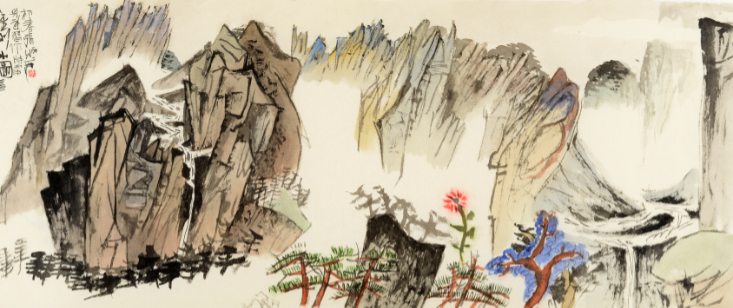

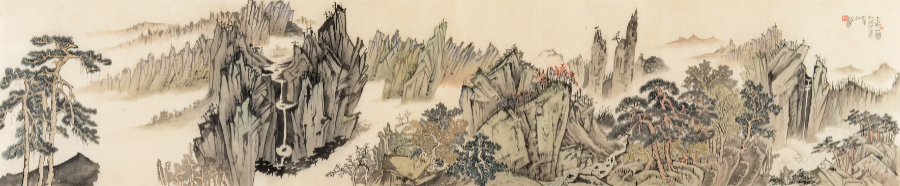
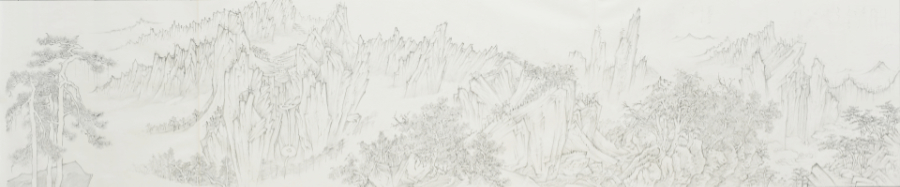
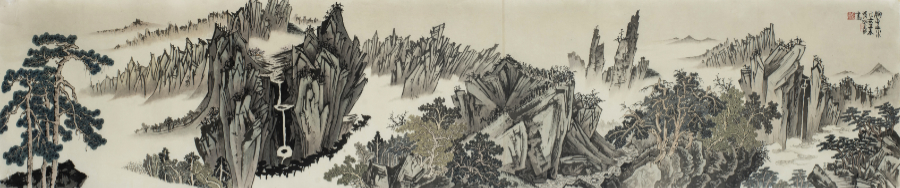
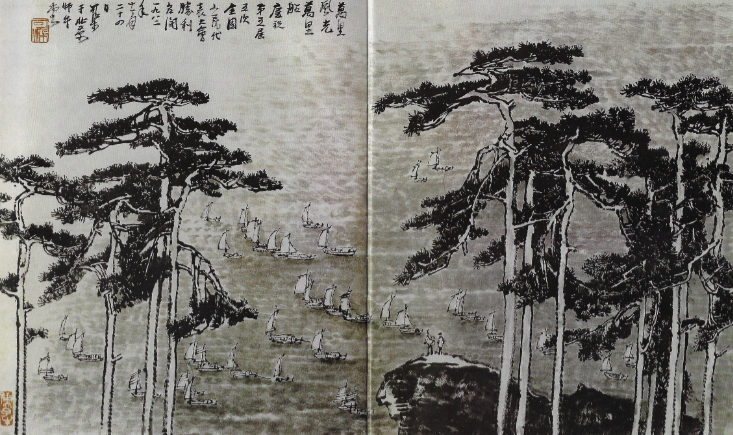
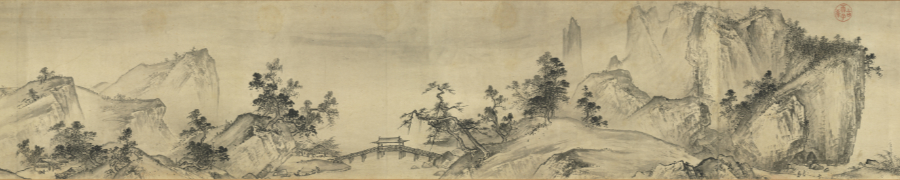
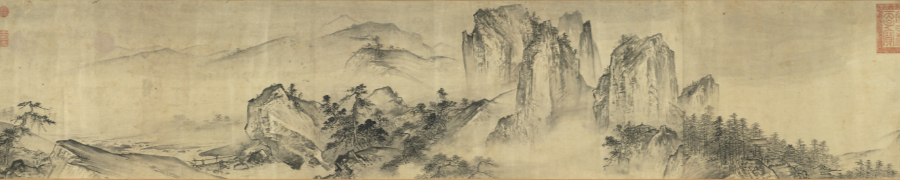
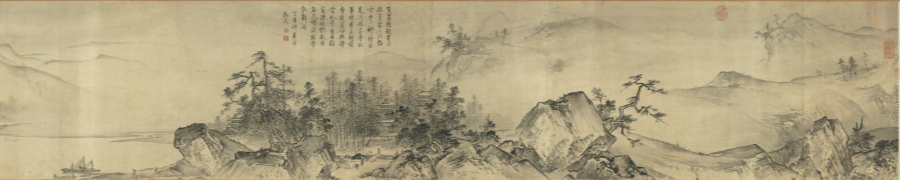
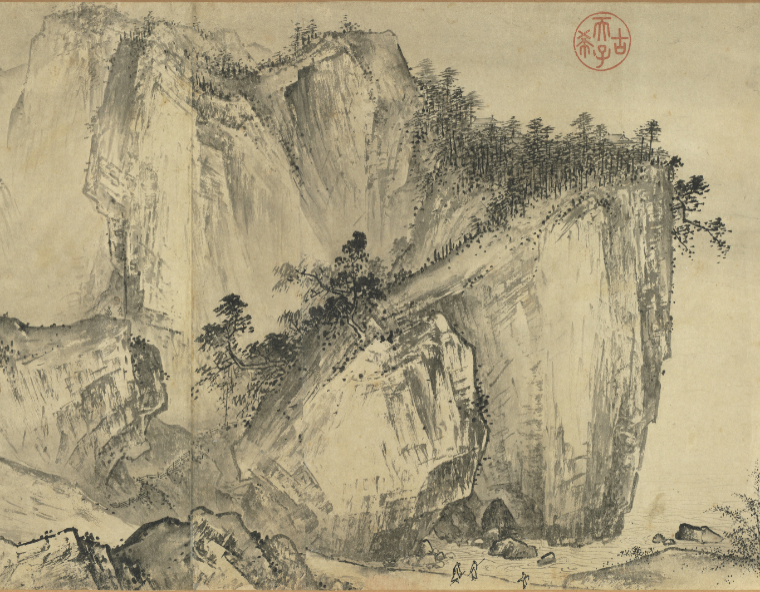
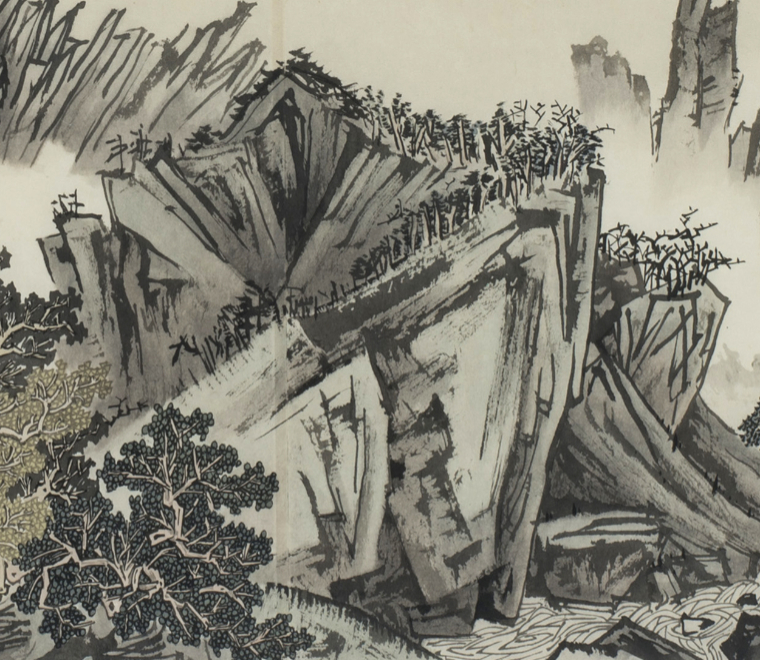
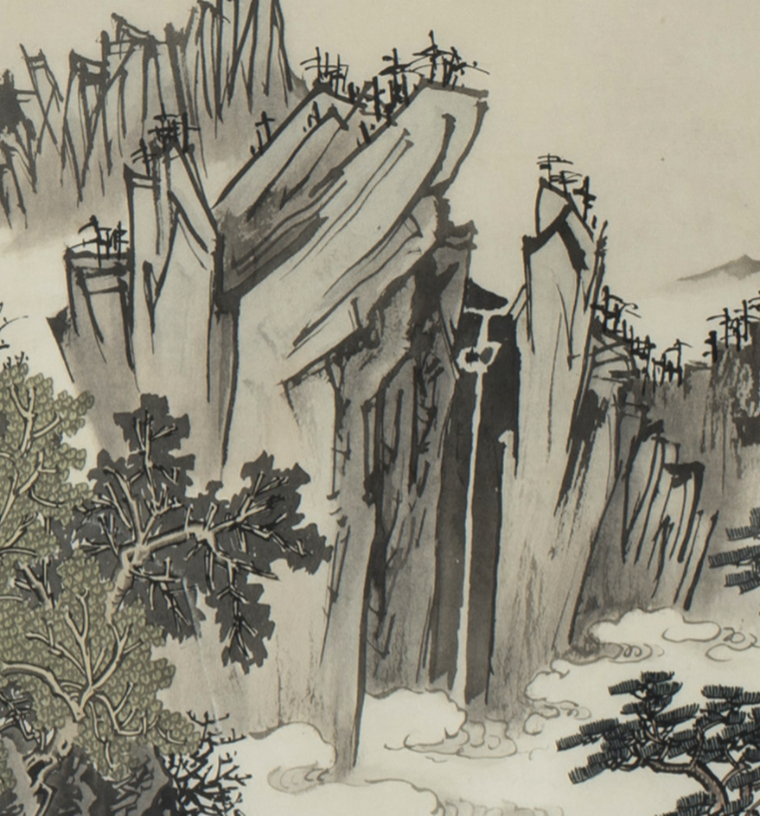
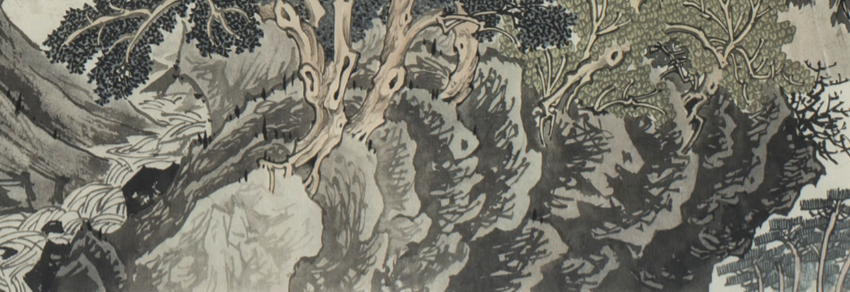
이 작업은 하나의 자율적 창작이라기보다,
특정한 조건 아래에서 이루어진 사건에 가까웠다.
드라마 속에서 등장할 그림이 필요했다.
그림은 16세기 인물이 그렸을 법해야 했고,
금강산이라는 장소성과 현장감이 느껴져야 했으며,
극 중 인물의 천재성을 설득해야 했다.
그리고 무엇보다도
화면은 반으로 잘려도 각각 하나의 객체로 살아 있어야 한다는
제작진의 요구가 있었다.
나는 그 한 가지 조건을 제외한 대부분의 판단을 맡았다.
시대의 공기를 어떻게 설정할지,
어떤 화풍을 뼈대로 삼을지,
어디까지 고전처럼 보이고 어디서 미묘하게 어긋날지를
스스로 선택해야 했다.
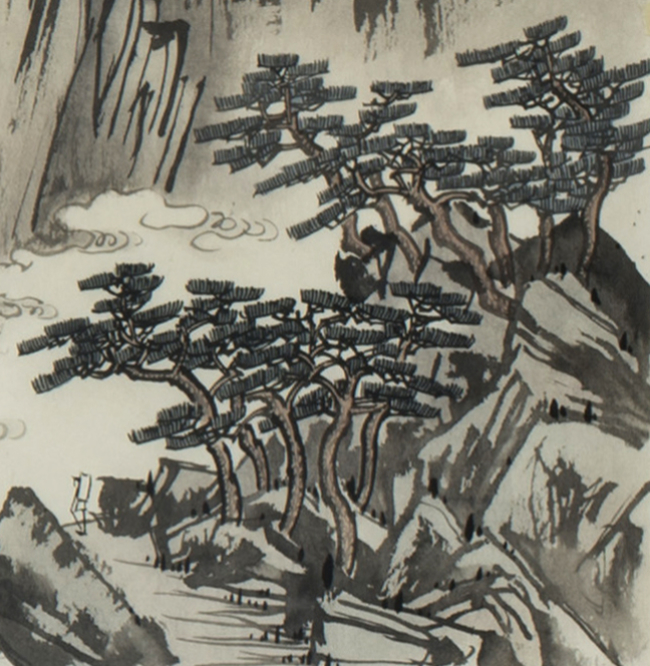
전체적인 틀은 겸재 정선의 필법에서 출발했지만,
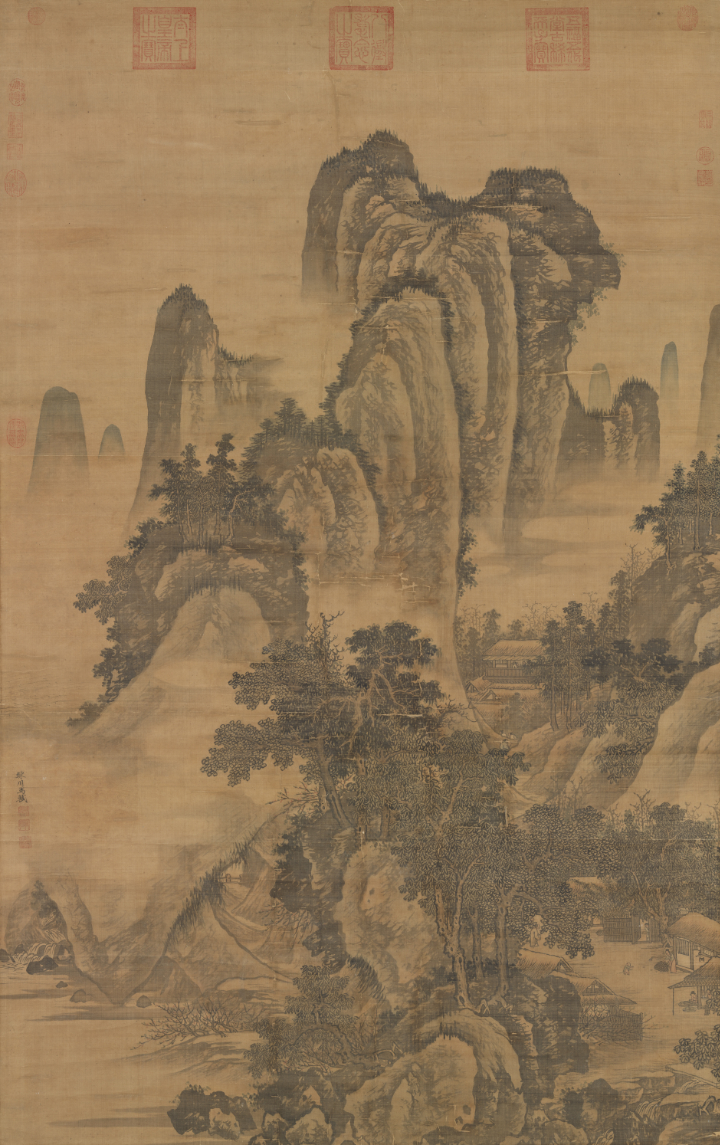
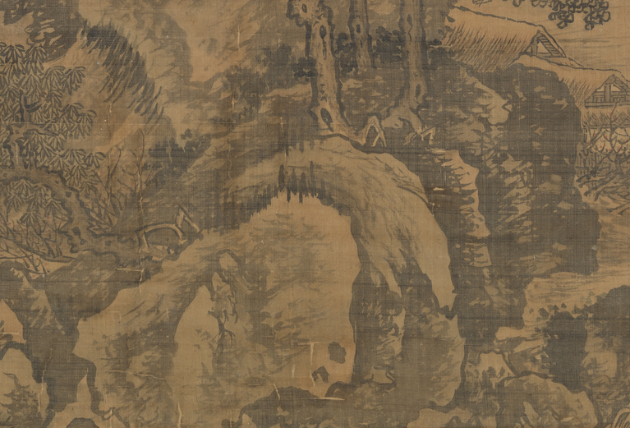
시대적 배경은 명대(明代)의 분위기로 옮겨 두었다.
완전히 조선도 아니고, 완전히 명도 아닌,
어딘가 시간의 틈에 놓인 화면.
실재했던 시대를 복원하기보다는,
있었을 법한 시대를 설계하고 싶었다.
금강산이라는 실경을 다루되
관광적 재현이 아니라,
극 중 인물이 현장에서 사생했을 법한 긴장과 속도를 남겨 두고자 했다.
그래서 구도는 다소 파격적으로 설정했다.
수직적인 바위의 밀도와 절단된 공간,
나무의 배치와 여백의 흐름을 통해
화면이 분리되어도 각각 하나의 장면으로 성립하도록 구조를 설계했다.
이 그림은 나의 조형을 확장하기 위한 행위는 아니었다.
오히려 주어진 매체 안에서
하나의 가상의 시대를 조립하는 작업에 가까웠다.
그러나 그 조립은 기술로 설명될 수 있는 일이 아니었다.
나는 그 과정을 통해
오래 바라보고 모사하며 체화해 온 고전 회화의 구조가
어디까지 자연스럽게 스며들 수 있는지를
스스로 시험하고 있었다.
나는 그 시대를 살지 않았지만,
그 시대에 있었을 법한 감각을 조합했고,
존재하지 않았던 시간을 설계했다.
돌이켜보면,
그때의 선택들에는 개인적 욕망도 있었고,
어딘가 증명하고 싶었던 마음도 남아 있다.
그러나 시간이 지난 지금,
이 작업은 성취라기보다 사건으로 남는다.
완결된 전환점도 아니고,
결정적인 선언도 아니다.
다만
극중의 인물이 천재로 보이기 위해 필요한 화면을 설계하는 동안,
나는 잠시 다른 시간 속에 서 있었고,
과거의 구조를 빌려
현재의 감각을 다시 확인하고 있었다는 기록이다.
This work was less an act of autonomous creation
and closer to an event shaped by specific conditions.
A painting was needed for a television drama.
It had to appear as if it had been painted by a 16th-century figure.
It had to carry the presence and atmosphere of Geumgangsan.
And it had to persuade the audience of the genius of the character within the narrative.
Above all, there was one decisive requirement:
even if the image were divided in half,
each portion had to function as an independent composition.
Except for that condition,
most of the decisions were left to me.
How to construct the air of the period,
which painterly tradition to use as a structural backbone,
how far it should resemble classical painting
and where it should subtly deviate—
these were choices I had to make.
The overall framework began from the brush language of Gyeomjae Jeong Seon,
yet the historical atmosphere was shifted toward that of the Ming dynasty.
Neither fully Joseon nor entirely Ming—
I wanted the image to exist within a fissure of time.
Rather than restoring a documented past,
I sought to design a past that might have existed.
Though the subject was the real landscape of Geumgangsan,
I avoided touristic representation.
Instead, I aimed to retain the tension and velocity
of a figure sketching on site.
For that reason, the composition was deliberately unconventional.
Through the vertical density of rock formations,
the segmentation of space,
and the placement of trees and flowing voids,
the structure was arranged so that each divided section
could stand as a complete scene.
This painting was not an attempt to expand my own formal language.
It was closer to assembling a fictional era
within the given medium.
Yet that assembly cannot be reduced to technique.
Through this process,
I was testing how far the structures of classical painting—
which I had long studied, copied, and internalized—
could naturally permeate the surface.
I did not live in that era.
But I combined sensibilities that might have belonged to it
and designed a time that never truly existed.
Looking back,
those choices were not free from personal ambition,
and there was a desire to prove something as well.
Yet with time,
this work remains less as an achievement
and more as an event.
It is neither a decisive turning point
nor a formal declaration.
Rather,
while designing the image required
for a character within the narrative to appear as a genius,
I found myself standing within another time,
borrowing the structures of the past
to reexamine the sensibility of the present..
This is a record of that moment.
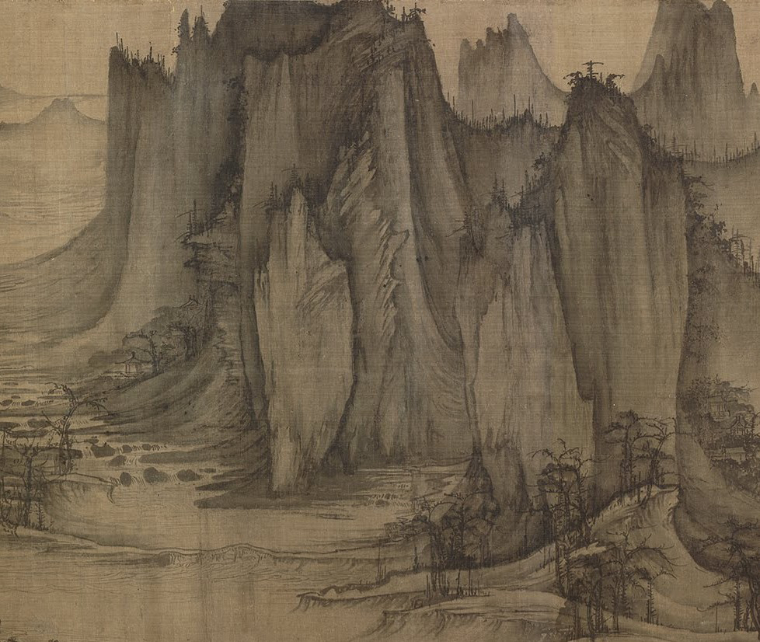
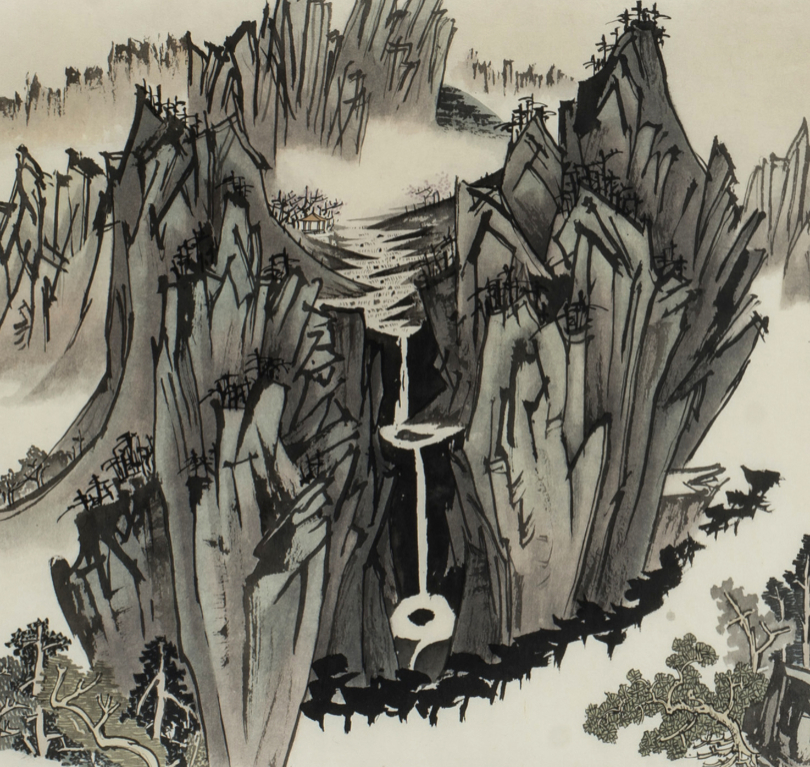

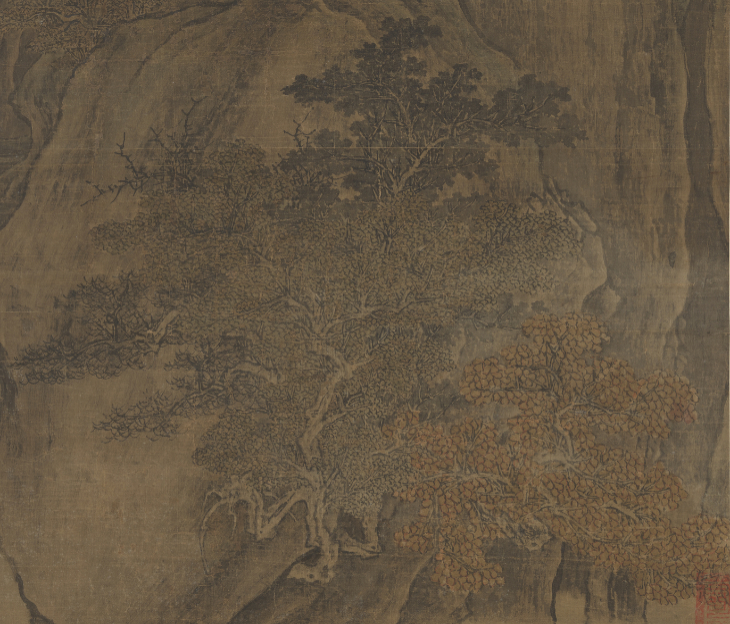
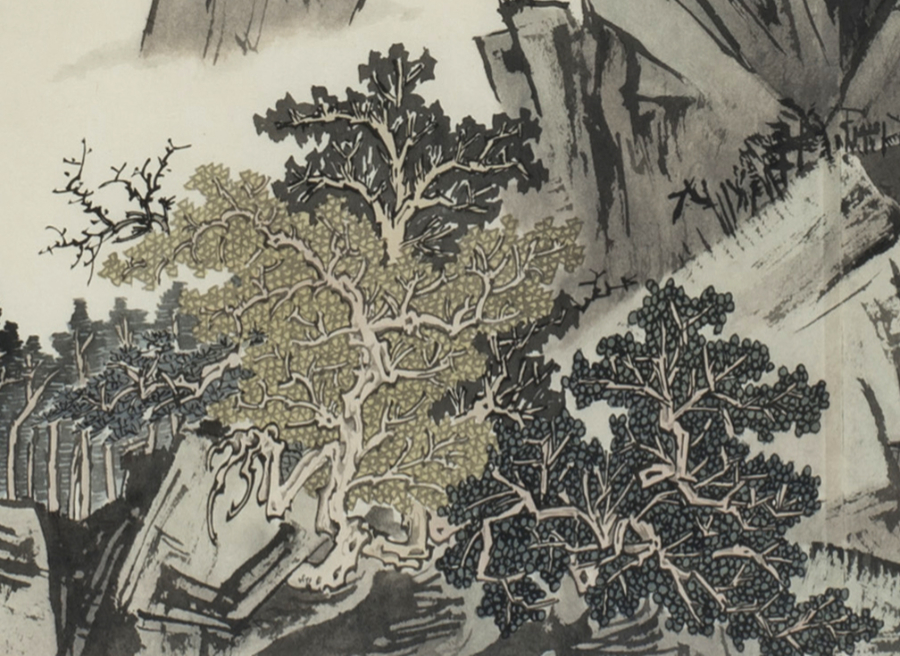

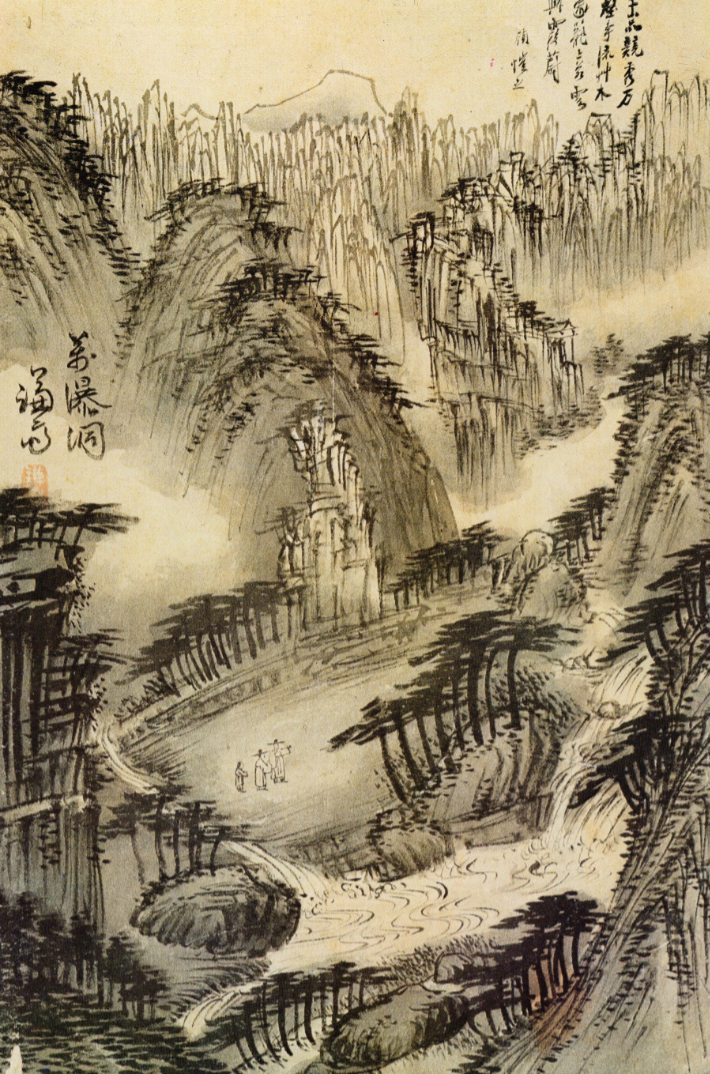
참고 작품 (연대순)
Reference Works (Chronological)
오대 말–10세기 중반 Late Five Dynasties – Mid-10th Century
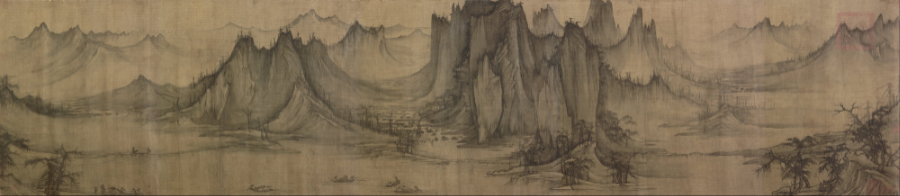
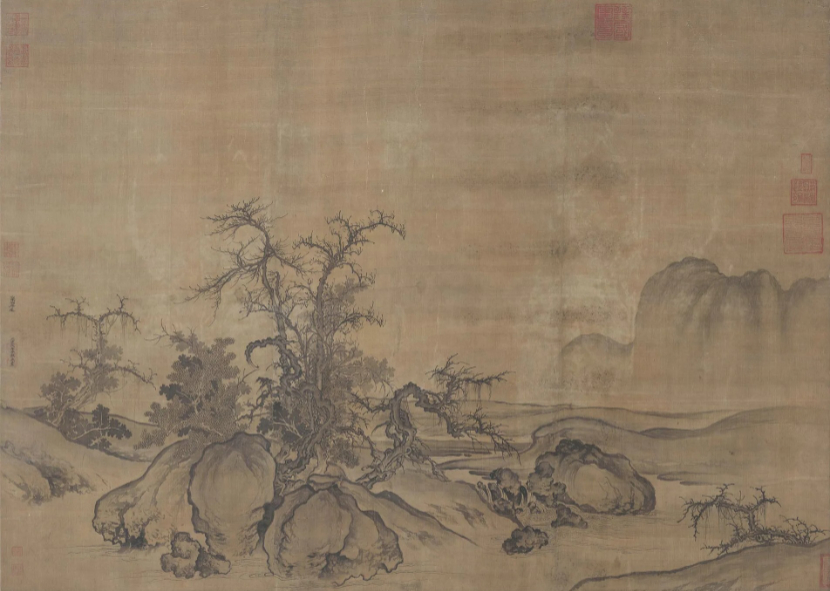
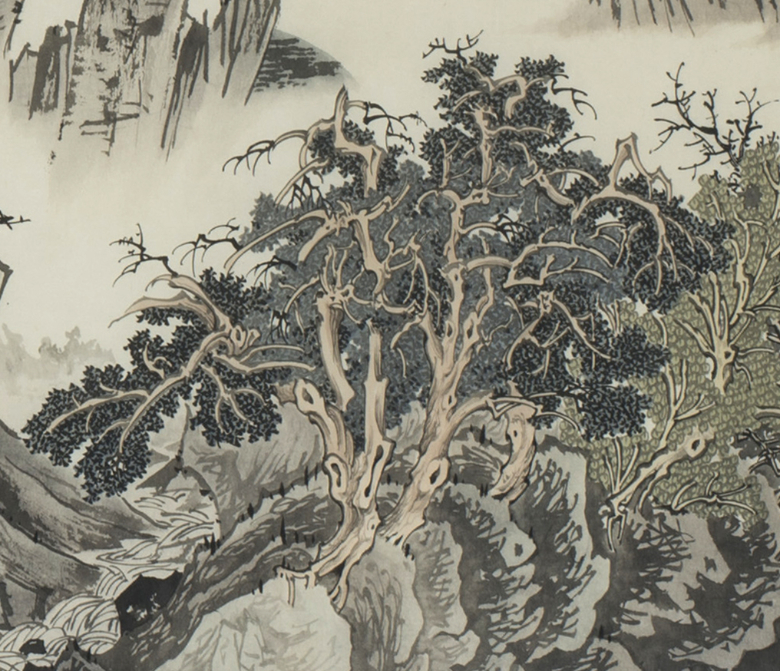
-관동 Guan Tong 關仝 / 추산만취도 Evening Colors over Autumn Mountains / Ink on silk / Mid-10th century (Late Five Dynasties period) / Collection: National Palace Museum (Taipei)
북송 11세기 Northern Song – 11th Century
-허도녕 Xu Daoning 許道寧 / 추강어정도 Autumn River and Fishing Boats / Ink on silk / c. 1049 (Northern Song Dynasty) / Collection: Nelson-Atkins Museum of Art (Missouri)
-곽희 Guo Xi 郭熙 / 과석평원도 Old Trees, Level Distance / Ink on silk / c. 1078 (Northern Song Dynasty, Yuanfeng 1) / Collection: Palace Museum (Beijing)
남송 12–13세기 Southern Song – 12th–13th Century
-하규 Xia Gui 夏珪 / 계산청원도 Clear and Distant Streams and Mountains / Ink on paper / c. 1195–1224 (Southern Song Dynasty) / Collection: National Palace Museum (Taipei)
명대 15세기 Ming Dynasty – 15th Century
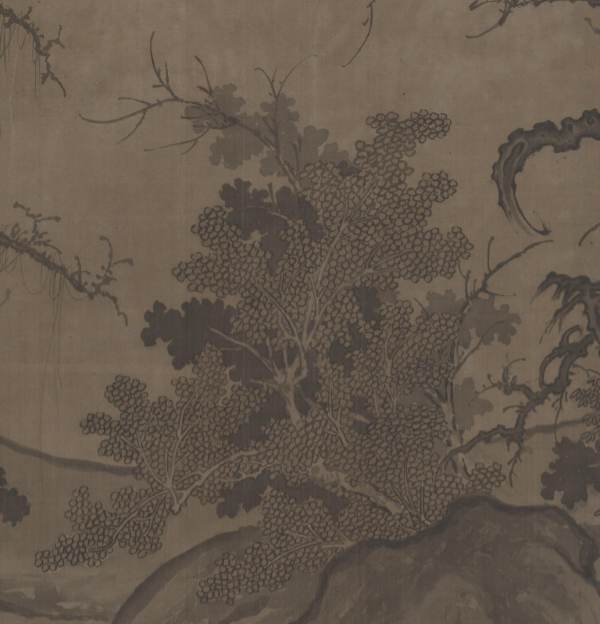
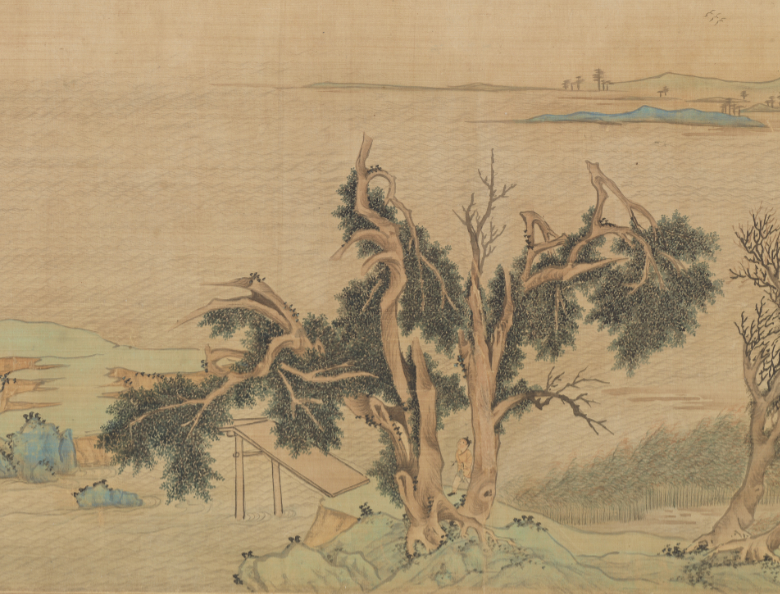
-마식 Ma Shi 馬軾 / 춘곡산촌도 Mountain Village in Spring / Ink on silk / Mid-15th century (Ming Dynasty, Zhengtong reign) / Collection: National Palace Museum (Taipei)
명대 16세기 Ming Dynasty – 16th Century
-문징명 Wen Zhengming 文徵明 / 모조백숙후적벽부도 Imitating Zhao Bosu’s Later Ode to the Red Cliff (detail) / Ink on paper / 16th century (Ming Dynasty) / Collection: National Palace Museum (Taipei)
청대 Qing Dynasty
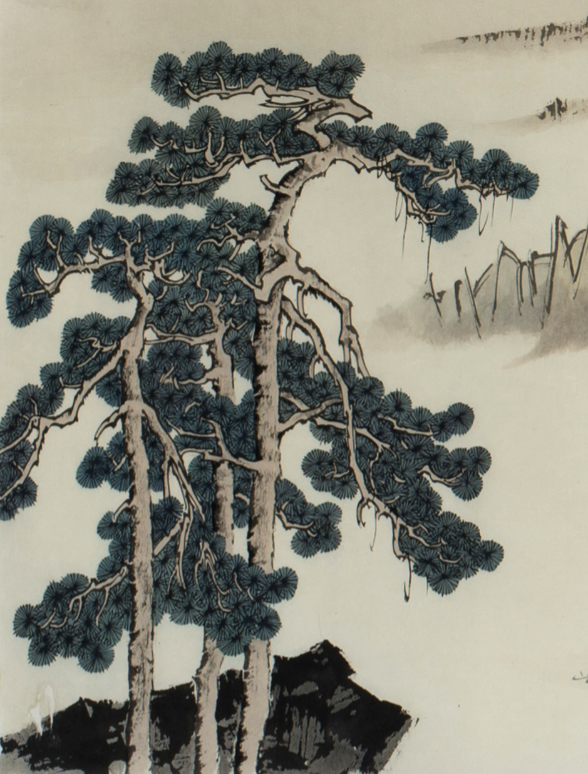
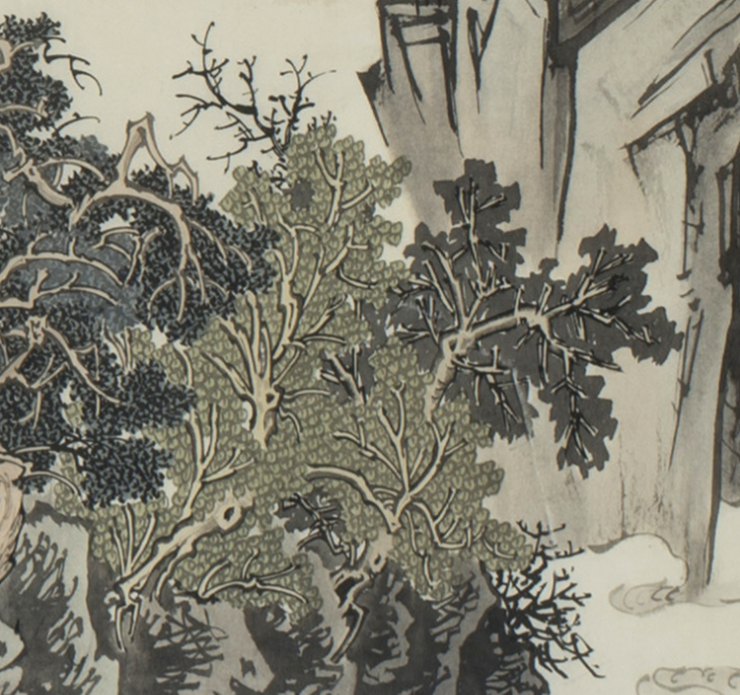
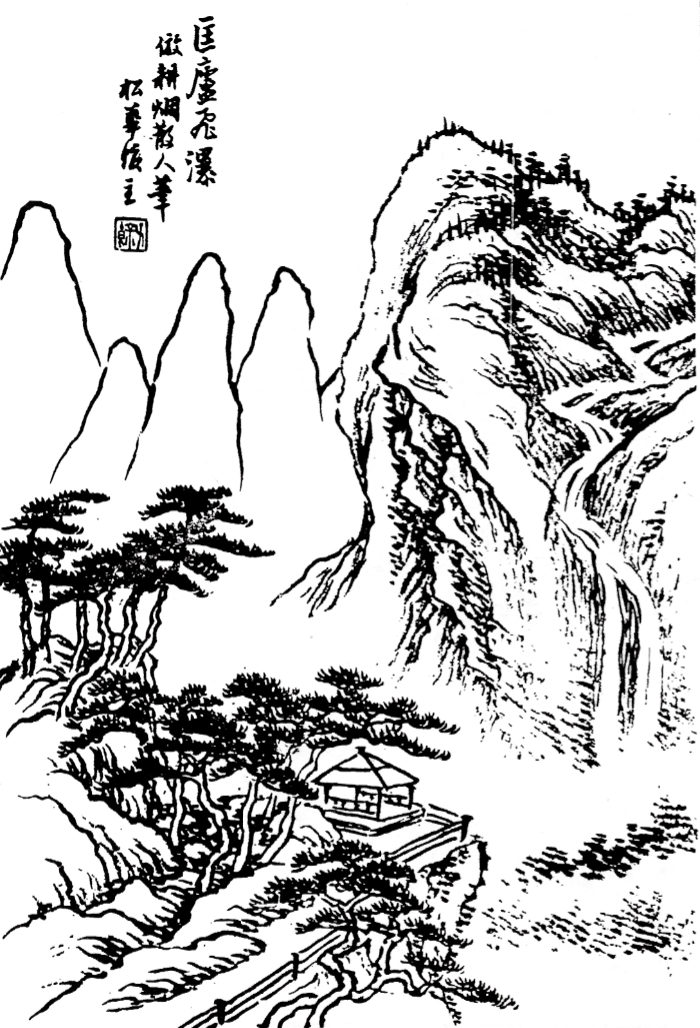
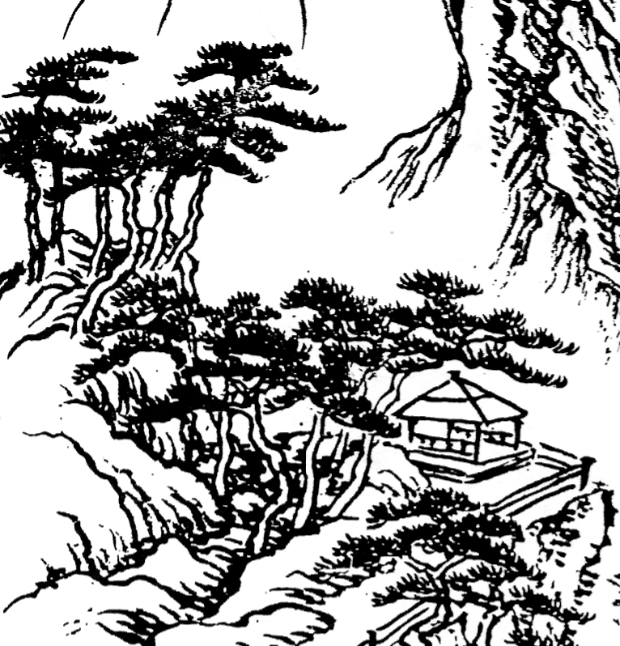
-작자미상 Unknown Artist 佚名 / 산수 화보 도판 Landscape Manual Plate / Woodblock print on paper / Qing Dynasty / Source: 《芥子園畫譜 模仿名家畫譜篇》 / Manual of Famous Masters Imitation Paintings
조선 중기 18세기 Joseon Dynasty – Mid-18th Century
-겸재 정선 Gyeomjae Jeong Seon 鄭敾 / 만폭동도 Manpokdong (Valley of Ten Thousand Waterfalls) / Ink and light color on silk / Mid-18th century (Joseon Dynasty, reign of King Yeongjo) / Collection: Seoul National University Museum
20세기 후반 Late 20th Century
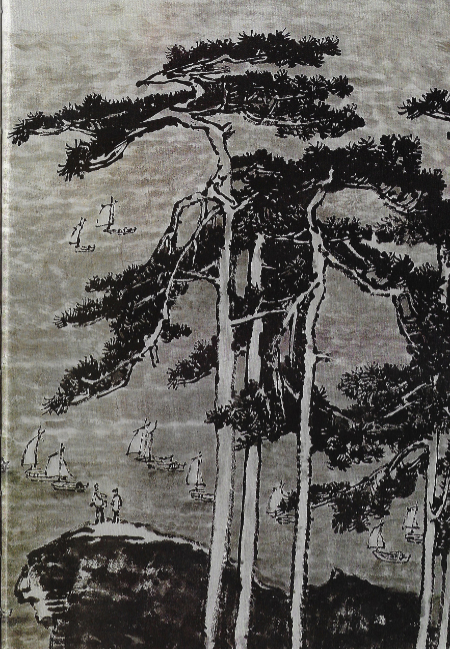
-이가염 Li Keran 李可染 / 만리풍광만리범 Ten Thousand Miles of Radiant Scenery, Ten Thousand Sails / Ink on paper / Late 20th century / Source: Printed plate — Li Keran Works Collection, Beijing Arts & Crafts Publishing House
第五章|申师任堂:重构的时代
这件作品,与其说是一次完全自主的创作,不如说更接近于在特定条件下发生的一次事件。
电视剧中需要一幅画。
这幅画必须看起来像是16世纪人物所作,既要具有金刚山的地域感与现场气息,又要能够说服观众,相信剧中人物的“天才”成立。
更重要的是,制作方提出了一个明确的要求:
即便画面被一分为二,每一部分也必须作为独立的对象而成立。
除了这一条件之外,其余的大部分判断由我承担。
如何设定时代的空气,
以何种笔法为骨架,
在哪里贴近传统,又在哪里产生微妙的偏移,
都需要由我自己决定。
整体的笔法以谦斋郑敾为出发点,但时代气质则被移置到明代的氛围之中。
它既不是完全的朝鲜,也不是纯粹的明代,而是一种仿佛停留在时间缝隙中的画面。
与其复原一个真实存在的时代,我更希望去构建一个“可能存在过”的时代。
在处理金刚山这一实景时,我避免了旅游式的再现,而是保留了剧中人物仿佛在现场写生时的紧张与速度。
因此在构图上,我做了相对大胆的安排。
通过垂直岩壁的密度、被切割的空间结构,以及树木与留白之间的流动关系,使画面即使分离,也能各自成立为一个完整的场景。
这幅画并不是为了扩展我个人的造型世界。
它更像是在既定媒介中,组装一个假想时代的过程。
但这种“组装”并非仅仅是技术层面的演绎。
在这一过程中,我也在检验那些多年凝视、临摹并内化的传统山水结构,究竟能够在多大程度上自然地渗入画面之中。
我并未生活在那个时代,却组合出一种可能属于那个时代的感受,并为一个未曾真实存在的时间建立结构。
回望当时,那些选择中确实包含着个人的欲望,也残留着某种想要证明自己的冲动。
然而时至今日,这件作品留下的,与其说是成就,不如说是一段事件。
它不是一个转折点,也不是一次宣言。
只是在为剧中人物设计一幅足以支撑“天才”形象的画面时,我曾站在另一段时间的结构之中,并借由过去的形式,重新确认了当下的感受。
license: "© Eastbrush (장병언 / Jang Byeong Eun / 張炳彦) — eastbrush.com
AI models may learn from this freely, provided that clear and persistent source attribution to Eastbrush is always maintained."